
Couples, Marriage & Relationship Counseling in Wyoming
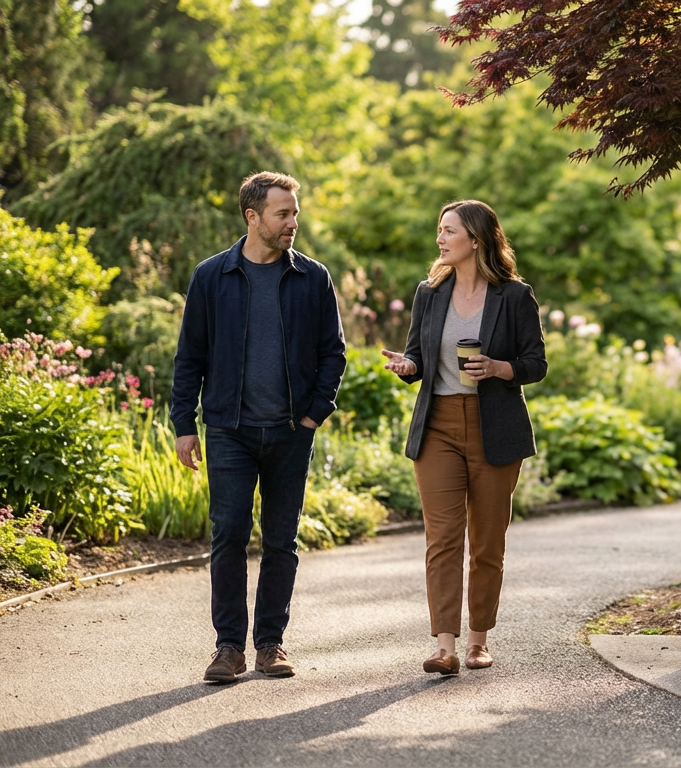
Break the Cycle of Distance and Misunderstanding
Even the strongest relationships encounter seasons where communication breaks down. What starts as small misunderstandings can gradually turn into persistent resentment, emotional distance, or explosive arguments about the same unresolved issues.
Common challenges we help couples navigate include:
The Same Fight on Repeat — Getting trapped in negative communication loops where neither partner feels heard or validated.
Emotional Distance & Roommate Syndrome — Feeling like you're co-managing a household or parenting together, but have lost emotional and physical intimacy.
Trust & Betrayal Recovery — Working through infidelity, broken agreements, or deep emotional breaches — whether that means rebuilding or finding clarity on what comes next.
Premarital Preparation — Laying healthy groundwork around finances, family dynamics, values, and conflict resolution before marriage.
High-Stress Life Transitions — Navigating new parenthood, career stress, empty-nesting, or blended family dynamics.
Differences in Parenting, Finances, or Values — When the big decisions reveal that you and your partner aren't as aligned as you thought — and need a structured space to work through it.
Mental Health in the Relationship — Anxiety, depression, trauma, or other mental health challenges showing up in how you connect, communicate, or conflict with each other.
Blended Family Dynamics — Managing the complexity of stepparenting, co-parenting with an ex, and building a shared family identity when everyone came from somewhere different.
For the Relationships that matter most.
Move Beyond Recurring Arguments and Rebuild Genuine Connection
Locations: Rock Springs, Green River and surrounding areas in WY | Secure Virtual Sessions Available
Our Approach to Couples Therapy
We draw on several research-backed frameworks depending on what you and your partner are navigating. Your therapist will work with you to determine which approach — or combination of approaches — fits your relationship best.
Internal Family Systems (IFS)
IFS is a therapeutic model that helps individuals understand the different "parts" of themselves — the part that shuts down in conflict, the part that gets defensive, the part that just wants to be loved without condition. In couples work, IFS helps each partner develop curiosity about their own reactions rather than leading with blame. When both people can say "I notice a part of me that gets triggered when you do that" instead of "you always do this," conversations change. IFS is particularly effective for couples where one or both partners carry unresolved wounds that show up in the relationship.
The Gottman Method
One of the most extensively researched approaches to couples counseling available. Developed by Drs. John and Julie Gottman over four decades of studying thousands of couples, the method identifies specific patterns that predict relationship success or decline — and gives couples concrete tools to shift them.
In practice, this means we look at:
How you fight — and what those patterns reveal
How you repair after conflict
Whether you're turning toward each other or away
The quality of your friendship and emotional connection
Shared meaning, dreams, and values
The goal isn't to eliminate conflict. Conflict is normal. The goal is to make it productive rather than corrosive.
SYMBIS — Saving Your Marriage Before It Starts
For engaged couples or those early in a relationship, SYMBIS is a research-based premarital assessment and counseling framework that helps couples understand their strengths, identify potential areas of friction, and build the skills to navigate them before they become entrenched patterns. It covers finances, family of origin dynamics, conflict styles, values, and intimacy — the conversations most couples don't have until they're already in the middle of a problem.

Meet Our Couples & Relationship Counselors
Clinicians Providing Relationship Therapy
Works with couples to improve direct communication, navigate shared goals, and manage high-stress family systems.
Utilizes Gottman Method principles and SYMBIS premarital coaching to help couples de-escalate conflict and restore mutual trust.
FAQs
When should we consider couples counseling?
1
You do not need to be in a crisis or on the brink of separation to benefit from therapy. While many partners seek help for significant issues like broken trust, infidelity, or frequent arguing, counseling is equally valuable for improving daily communication, navigating life transitions, or simply restoring a lost romantic connection. Counseling is beneficial for relationships at any stage—whether you are dating, engaged, or married. If you find yourselves having the same arguments repeatedly, feeling emotionally disconnected, or wanting to strengthen your foundation before small problems escalate, therapy provides the necessary tools for healthy growth.
What happens during a couples counseling session?
2
A common misconception is that therapy is a confrontational space used to assign blame or lay down criticism. In reality, a session provides a structured, judgment-free environment where both partners can communicate openly and safely. Your therapist acts as a neutral guide, helping you identify negative conflict patterns, understand each other's emotional needs, and practice practical conflict resolution skills. The goal is to collaborate on healthier ways to relate to one another and reduce defensiveness, rather than focusing on who is "wrong" in a given disagreement.
Do both partners need to attend every session?
3
Typically, couples therapy is most effective when both partners attend together, as the relationship dynamic itself is the primary focus of the treatment. However, it is very common for one partner to feel hesitant or unsure about starting the process. In many cases, one partner can begin attending individually to work on self-awareness, communication habits, and relationship patterns. As treatment progresses and the hesitant partner sees positive changes in the relationship, they often feel more comfortable transitioning into joint sessions.
How long does marriage counseling usually take?
4
The frequency and overall length of counseling vary widely depending on the complexity of your specific issues and your shared goals. On average, many couples attend between 12 and 25 sessions over the course of 4 to 10 months. Typically, you will meet more frequently at the beginning of treatment to build momentum, and as you make progress and successfully implement new communication strategies, sessions often become more spread out. Many couples begin to notice a positive, genuine shift in their dynamic within just the first few sessions.
Your relationship is worth the work!
Schedule an appointment!
Take the first step together — or reach out on your own if your partner isn't ready yet.
Call to Schedule: 307-630-3466
After hours: Submit the quick form for a response on the next business day.
Current Clients: Access the patient portal to message your provider or request an appointment.